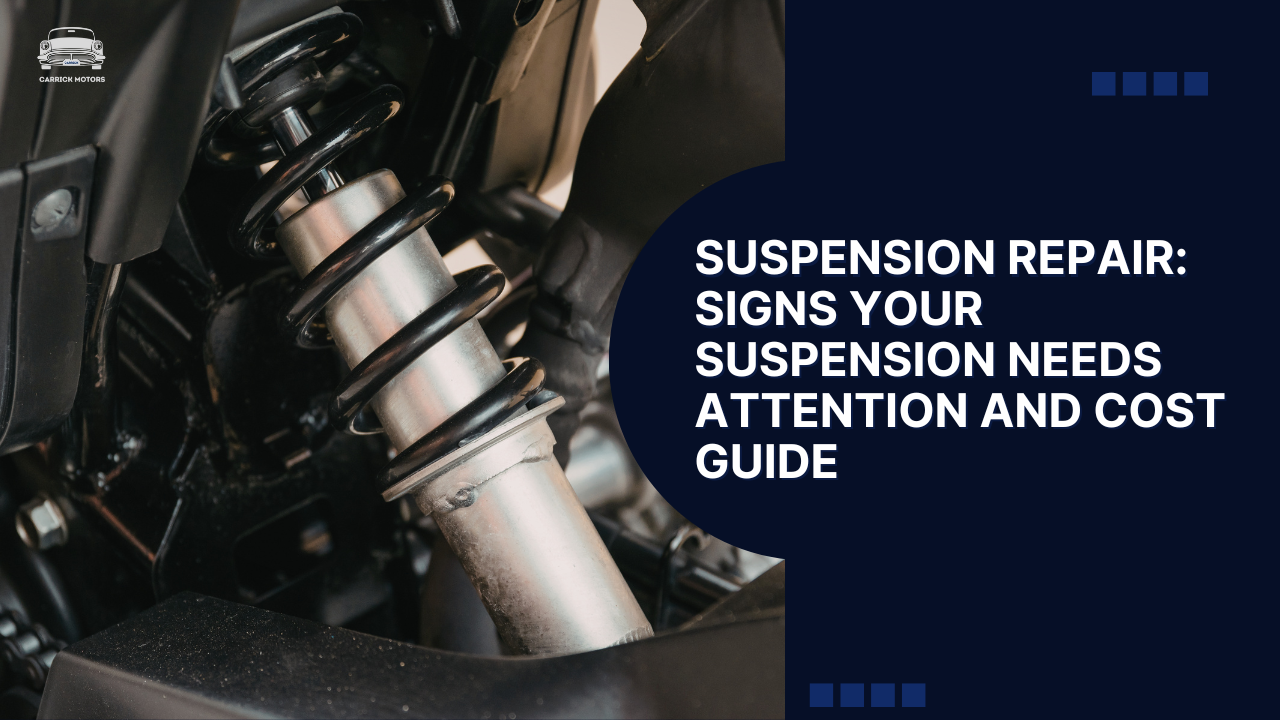
Suspension repair in Tullamarine costs between $200 and $1,500 depending on which components need replacement. Shock absorber replacement costs $300-800 per axle, while ball joint replacement costs $200-500 per joint. Complete suspension overhauls addressing multiple worn components may cost $1,500-3,000. Most suspension components last 80,000-150,000 kilometres depending on driving conditions and road quality.
Your suspension system maintains tyre contact with the road, absorbs bumps, and keeps your vehicle stable during cornering and braking. Worn suspension compromises handling, increases stopping distances, accelerates tyre wear, and creates safety hazards. This guide explains suspension warning signs, component functions, and repair costs for Tullamarine drivers.
How Your Suspension System Works
Understanding suspension components helps recognise when problems develop.
Shock Absorbers and Struts
Function: Shock absorbers (and struts, which combine shock absorbers with structural support) control suspension movement. They dampen the bouncing motion that would otherwise continue after hitting bumps.
How They Work: Internal pistons force oil through small passages, converting motion energy into heat. This resistance controls how quickly suspension compresses and rebounds.
Why They Matter: Without working shocks, vehicles bounce excessively after bumps. Tyres lose road contact during oscillation. Braking distances increase dramatically. Handling becomes unpredictable.
Springs
Function: Springs support vehicle weight and absorb initial bump impact. Coil springs are most common; some vehicles use leaf springs (mainly trucks and older vehicles).
How They Work: Springs compress when hitting bumps, absorbing impact energy. They then release this energy, pushing the suspension back to normal position.
Why They Matter: Broken or sagged springs reduce ride height, affecting handling and ground clearance. Suspension geometry changes, causing alignment issues and uneven tyre wear.
Control Arms and Bushings
Function: Control arms connect the wheel assembly to the vehicle body, controlling wheel movement. Rubber bushings at pivot points allow controlled movement while isolating vibration.
How They Work: Control arms pivot as suspension travels, maintaining proper wheel positioning. Bushings flex to permit movement while dampening road vibrations.
Why They Matter: Worn bushings create excessive movement, causing clunking noises and vague handling. Failed bushings allow metal-to-metal contact, damaging control arms.
Ball Joints
Function: Ball joints connect control arms to steering knuckles, allowing suspension travel while permitting steering movement.
How They Work: A ball-and-socket design enables multi-directional movement. Internal grease provides lubrication. Sealing boots protect from contamination.
Why They Matter: Ball joints are safety-critical components. Failure can cause wheel separation from the vehicle. Worn joints cause wandering steering and accelerate tyre wear.
Sway Bars and Links
Function: Sway bars (stabiliser bars) reduce body roll during cornering. End links connect sway bars to suspension components.
How They Work: During cornering, sway bars transfer force between left and right suspension, reducing lean. Links transmit this force while allowing vertical suspension movement.
Why They Matter: Worn sway bar links cause clunking over bumps. Disconnected or broken sway bars significantly increase body roll, affecting handling safety.
Steering Components
Function: Tie rods connect the steering rack to wheel assemblies, transmitting steering input to the wheels.
How They Work: Inner tie rods connect to the steering rack. Outer tie rod ends connect to steering knuckles. Adjustment allows wheel alignment setting.
Why They Matter: Worn tie rod ends create steering play and wandering. Failed tie rods cause complete loss of steering control, an extreme safety hazard.
Signs Your Suspension Needs Repair
Recognising symptoms enables timely repair before safety becomes compromised.
Excessive Bouncing
What You’ll Notice: Vehicle continues bouncing after hitting bumps. Nose dives excessively during braking. Rear squats noticeably during acceleration. Body rolls excessively in corners.
What It Indicates: Worn shock absorbers no longer control suspension movement. Internal valving has failed or oil has leaked.
The Bounce Test: Push down firmly on each corner of the vehicle and release. The vehicle should return to rest within one or two oscillations. Continued bouncing indicates worn shocks.
Urgency: Worn shocks degrade handling and increase stopping distances but don’t typically cause immediate failure. Plan replacement promptly but immediate breakdown isn’t likely.
Clunking or Knocking Noises
What You’ll Hear: Clunking when driving over bumps. Knocking sounds when turning. Rattling from underneath the vehicle. Sounds worse over rough roads.
What It Indicates: Worn bushings allowing excessive movement. Worn ball joints or tie rod ends. Loose or worn sway bar links. Failed shock mounts.
Identifying Location: Front clunks often indicate ball joints, tie rods, or sway bar links. Rear clunks typically suggest shock mounts or bushings. Professional inspection identifies specific worn components.
Urgency: Investigate clunking sounds promptly. While some causes are minor (sway bar links), others (ball joints) are safety-critical. Don’t assume clunks are harmless.
Vehicle Pulling or Wandering
What You’ll Notice: Vehicle pulls to one side consistently. Steering feels vague or wandering. Constant steering corrections needed on straight roads. Vehicle doesn’t track straight after bumps.
What It Indicates: Worn tie rod ends creating steering play. Worn ball joints affecting alignment. Uneven spring sag changing alignment. Damaged control arm bushings.
Related Issues: Pulling may also indicate tyre problems, brake issues, or alignment needs. Comprehensive inspection identifies actual causes.
Urgency: Wandering steering affects safety, particularly at highway speeds. Investigate promptly to identify whether suspension, alignment, or other issues are responsible.
Uneven Tyre Wear
What You’ll See: Wear on inner or outer edges only. Cupped or scalloped wear patterns. Significantly different wear between sides. Rapid wear despite recent replacement.
What It Indicates: Worn ball joints or tie rod ends affecting alignment. Failed bushings allowing alignment shift. Worn shocks causing tyre bounce (cupping). Spring sag changing suspension geometry.
Inspection: Check tyre wear patterns regularly. Unusual wear warrants suspension inspection before alignment correction or tyre replacement, new tyres will wear identically if underlying causes aren’t addressed.
Urgency: Address underlying suspension issues before alignment correction. Otherwise, new alignment settings will shift as worn components move.
Nose Diving or Rear Squatting
What You’ll Notice: Front end dives dramatically during braking. Rear end squats noticeably during acceleration. Weight transfer feels excessive and slow to recover.
What It Indicates: Worn shock absorbers not controlling weight transfer. Possibly combined with weak springs.
Safety Impact: Nose dive during braking shifts weight forward, reducing rear tyre traction. In emergency braking, this can cause loss of control. Squat during acceleration reduces front tyre grip, affecting steering response.
Urgency: These symptoms indicate significantly worn shocks affecting braking safety. Plan replacement soon.
Visible Damage or Leaks
What You’ll See: Oil residue on shock absorber bodies. Cracked or torn rubber bushings. Torn ball joint boots. Bent or damaged components.
What It Indicates: Leaking shocks have failed internally. Torn boots allow contamination entering joints. Visible damage requires replacement.
Inspection: Look at suspension components during regular servicing. Technicians should note visible wear during inspections.
Urgency: Leaking shocks require replacement, they cannot be repaired. Torn boots should be addressed before contamination destroys joints.
Rough or Harsh Ride
What You’ll Notice: Every bump feels harsher than normal. Road imperfections transmit directly to cabin. Ride quality has deteriorated over time.
What It Indicates: Worn bushings no longer isolating vibration. Shock absorber valving has failed (may be harsh or too soft). Spring condition affecting ride.
Note: Some “harsh ride” complaints result from tyre condition rather than suspension. Low-profile tyres, worn tyres, or incorrect pressures affect ride quality.
Suspension Component Lifespan
Understanding typical lifespans helps anticipate maintenance needs.
Shock Absorbers
Typical Lifespan: 80,000-150,000 kilometres
Factors Affecting Life: Road conditions, rough roads accelerate wear. Driving style, aggressive driving stresses shocks. Vehicle loading, heavy loads increase wear. Climate, extreme temperatures affect seals.
Replacement Approach: Replace in pairs (both fronts or both rears). Mismatched shocks cause handling imbalance.
Springs
Typical Lifespan: 150,000+ kilometres (often vehicle lifetime)
Failure Modes: Breakage, usually from corrosion or fatigue. Sagging—gradual loss of height over time.
Signs of Failure: Vehicle sitting lower than normal. Visible broken coil sections. Uneven ride height side-to-side.
Bushings
Typical Lifespan: 100,000-150,000 kilometres
Factors Affecting Life: Heat exposure, under-bonnet bushings fail faster. Oil contamination—accelerates rubber deterioration. Age, rubber perishes regardless of mileage.
Replacement Approach: Individual bushings can be replaced. Complete bushing kits address multiple worn components efficiently.
Ball Joints
Typical Lifespan: 100,000-200,000 kilometres
Factors Affecting Life: Boot condition, torn boots cause rapid wear. Lubrication—some joints are greaseable. Road conditions, rough roads accelerate wear.
Replacement Approach: Replace worn joints immediately, they’re safety-critical. Includes wheel alignment after replacement.
Tie Rod Ends
Typical Lifespan: 100,000-200,000 kilometres
Factors Affecting Life: Similar to ball joints, boot condition is critical.
Replacement Approach: Often replaced in pairs. Always requires wheel alignment after replacement.
Sway Bar Links
Typical Lifespan: 80,000-120,000 kilometres
Common Failure: Worn ball joints within links. Torn boots allowing contamination.
Replacement Approach: Inexpensive components, replace when worn rather than monitoring.
Suspension Repair Costs in Tullamarine
Understanding costs helps budget for necessary repairs.
Individual Component Costs
Shock Absorbers (per axle): $300-800 Includes pair of shocks and labour. Quality varies significantly, premium brands cost more.
Strut Assembly (per axle): $400-1,000 Complete assembly including spring, strut, and mount.
Coil Springs (per axle): $250-500 Includes springs and labour for removal/installation.
Control Arm (each): $250-600 Includes arm with bushings and labour. Some vehicles have upper and lower arms.
Bushings (each): $100-300 Labour varies significantly by location and accessibility.
Ball Joints (each): $200-500 Includes joint, labour, and wheel alignment.
Tie Rod End (each): $150-350 Includes end, labour, and wheel alignment.
Sway Bar Links (pair): $150-350 Relatively quick replacement, mostly parts cost.
Wheel Alignment: $89-150 Required after most suspension repairs.
Package Pricing
Front Suspension Refresh (shocks, links, alignment): $600-1,200 Addresses common front-end wear items.
Rear Shock Replacement: $300-600 Simpler than front, fewer components involved.
Complete Suspension Overhaul: $1,500-3,000+ Addresses multiple worn components throughout.
Factors Affecting Cost
Vehicle Type: European and luxury vehicles cost more due to parts pricing. Common vehicles benefit from parts availability.
Component Quality: Premium shock brands (Bilstein, Koni, Monroe) cost more than budget options. Quality affects performance and longevity.
Labour Complexity: Some suspensions allow quick component access. Others require extensive disassembly.
Multiple Components: Addressing several worn components together saves labour compared to separate visits.
When to Replace Suspension Components
Timing decisions balance safety, cost, and convenience.
Safety-Critical Replacements
Replace immediately when: – Ball joints have excessive play – Tie rod ends are worn – Springs are broken – Shock absorber is completely failed (severe leaking, no damping)
These components directly affect vehicle control. Failure risks loss of steering or wheel separation.
Performance Replacements
Plan replacement soon for: – Worn shock absorbers (bouncy ride, poor braking control) – Worn bushings (clunking, vague handling) – Worn sway bar links (clunking over bumps)
These affect comfort and handling but don’t typically cause sudden failure.
Preventive Replacements
Consider proactive replacement: – High-mileage vehicles with original components – Before long trips when components show wear – When one side fails, consider replacing both sides
Bundling Repairs
Combining related repairs saves money: – Replace shocks when doing major suspension work – Address bushings when control arms are removed – Include alignment with any steering/suspension repair
DIY vs Professional Suspension Repair
Suspension work requires proper equipment and expertise.
Professional Advantages
Proper Equipment: Spring compressors for strut work (dangerous without proper tools). Alignment equipment for post-repair adjustment. Press equipment for bushing replacement.
Diagnostic Expertise: Identifying which components actually need replacement. Recognising wear patterns indicating multiple issues. Proper torque specifications and procedures.
Safety Considerations: Compressed springs store dangerous energy. Improper suspension work affects vehicle control. Liability protection through professional service.
When DIY Might Work
Shock Absorber Replacement: Non-strut shocks (many trucks, rear suspensions) can be straightforward. No spring compression required.
Sway Bar Links: Simple bolt-on replacement in most vehicles. Basic tools sufficient.
Inspection: Visual inspection of components can identify obvious wear.
When Professional Service Is Essential
Strut Replacement: Spring compression required—dangerous without proper equipment.
Ball Joint Replacement: Requires press tools and proper procedures. Alignment required afterward.
Bushing Replacement: Most require press equipment for removal and installation.
Alignment: Professional equipment required for accurate adjustment.
Carrick Motors provides complete suspension diagnosis and repair with proper equipment and experienced technicians.
Suspension and Wheel Alignment
Suspension condition directly affects wheel alignment.
How They Relate
Alignment Geometry: Wheel alignment measures angles determined by suspension component positions. Worn components allow these positions to shift.
Wasted Alignment: Aligning a vehicle with worn suspension components wastes money. As components move, alignment shifts. Address suspension wear before alignment.
When to Align
After Suspension Repairs: Ball joint, tie rod, control arm, or strut replacement requires alignment.
When Wear Patterns Appear: Uneven tyre wear warrants alignment check—but inspect suspension first.
Routine Maintenance: Annual alignment checks identify developing issues.
Frequently Asked Questions About Suspension Repair
How do I know if my shocks are worn out?
Worn shocks cause excessive bouncing after bumps, nose dive during braking, body roll in corners, and increased stopping distances. The bounce test helps assess condition, push down firmly on each corner and release. The vehicle should settle within one or two bounces. Continued bouncing indicates worn shocks. Oil leaking from shock bodies confirms failure.
Is it safe to drive with worn suspension?
Safety depends on which components are worn and severity. Worn shock absorbers reduce handling and braking control but don’t typically cause sudden failure, you can drive to a service appointment. Worn ball joints or tie rod ends are safety-critical and can fail suddenly, causing loss of vehicle control. Have clunking, wandering, or loose steering inspected promptly.
Do I need to replace shocks in pairs?
Yes, always replace shocks in pairs (both fronts or both rears). Mismatched shocks cause uneven handling and braking. The vehicle may pull or handle unpredictably during emergency manoeuvres. If one shock has failed, the matching one is likely worn similarly.
How long does suspension repair take?
Simple repairs like shock absorber or sway bar link replacement take 1-2 hours. Ball joint or control arm replacement takes 2-3 hours including alignment. Complete suspension overhauls may take a full day. Contact Carrick Motors for specific estimates based on your vehicle and required repairs.
Why does my car clunk over bumps?
Clunking over bumps typically indicates worn suspension components, ball joints, tie rod ends, sway bar links, or bushings. The clunking occurs as worn components move excessively during suspension travel. Front clunks often indicate steering/suspension joints. Rear clunks typically suggest shock mounts or bushings. Professional inspection identifies specific worn components.
Can worn suspension damage other components?
Yes, worn suspension accelerates wear throughout the vehicle. Failed shocks cause uneven tyre wear and stress other suspension components. Worn bushings cause alignment shift, creating tyre wear. Worn ball joints affect alignment and stress steering components. Addressing suspension wear promptly prevents cascading damage.
How often should suspension be inspected?
Suspension should be inspected during regular servicing, typically every 10,000-15,000 kilometres. Inspect immediately if symptoms appear: clunking, bouncing, wandering, or uneven tyre wear. Vehicles driven on rough roads or carrying heavy loads benefit from more frequent inspection.
Professional Suspension Service at Carrick Motors
Suspension systems maintain vehicle control, comfort, and safety. Warning signs including clunking noises, excessive bouncing, wandering steering, and uneven tyre wear indicate components needing attention. Costs range from $200 for simple repairs to $3,000 for complete overhauls, with most common repairs falling between $300-800.
Carrick Motors provides comprehensive suspension diagnosis and repair throughout Tullamarine, Airport West, Gladstone Park, and Tullamarine’s northern suburbs. Experienced technicians identify worn components accurately, recommending only necessary repairs. Quality parts ensure lasting repairs, and proper alignment completes every steering and suspension service.Contact Carrick Motors when suspension symptoms appear. Professional diagnosis identifies actual problems, ensuring your vehicle handles safely and maintains proper tyre contact with Tullamarine roads.