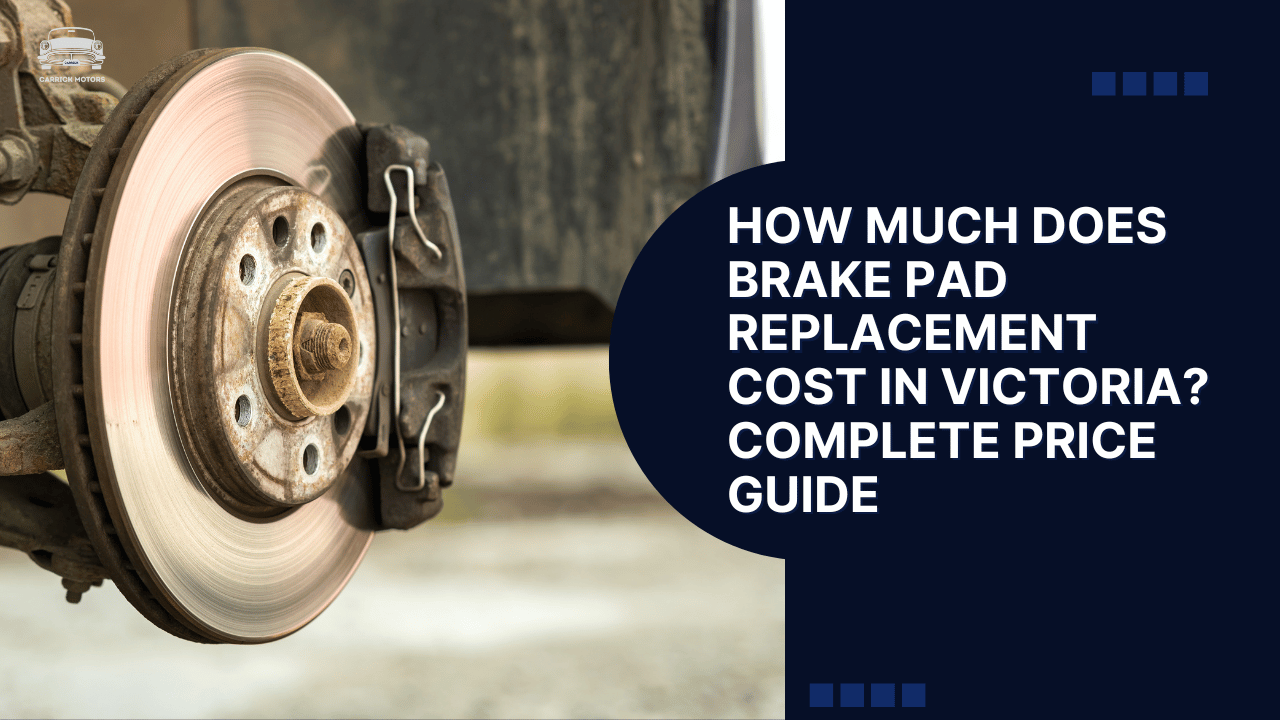
Brake pad replacement in Victoria costs between $150 and $350 per axle for standard passenger vehicles. Front brake pad replacement typically costs $180 to $350, while rear pad replacement costs $150 to $300. European and luxury vehicles cost $280 to $500 per axle due to specialised parts and increased labour requirements.
Understanding brake pad replacement pricing helps Victoria drivers budget appropriately and evaluate service quotes accurately. Costs vary based on vehicle type, pad quality, and additional services required. This guide breaks down pricing factors, explains what influences costs, and helps you make informed decisions about brake servicing at fair prices.
Brake Pad Replacement Cost Breakdown
Brake pad replacement costs combine parts, labour, and potential additional services. Understanding each component helps evaluate quotes and identify fair pricing.
Parts Costs
Brake pad prices vary significantly based on quality level and vehicle specifications.
Economy Brake Pads: $30 to $60 per axle set Budget pads use basic friction materials providing adequate stopping power. Shorter lifespan and increased dust production offset lower purchase prices. Suitable for vehicles nearing sale or low-mileage drivers prioritising immediate cost savings.
Mid-Range Brake Pads: $60 to $120 per axle set Quality aftermarket pads offer good performance and reasonable longevity. Reputable brands like Bendix, RDA, and TRW provide reliable performance meeting or exceeding OEM specifications. Best value for most drivers balancing cost and quality.
Premium Brake Pads: $100 to $200 per axle set High-performance ceramic and premium semi-metallic pads deliver superior stopping power, reduced noise, minimal dust, and extended service life. Brands like Brembo, EBC, and genuine manufacturer pads command premium prices justified through performance benefits.
Genuine Manufacturer Pads: $120 to $300 per axle set Original equipment pads from vehicle manufacturers guarantee exact specifications. Premium pricing reflects brand assurance and precise fitment. Required for some warranty situations and preferred by owners prioritising manufacturer specifications.
Labour Costs
Labour charges reflect technician time, expertise, and workshop overhead.
Independent Workshop Labour: $80 to $150 per axle Competitive labour rates at independent mechanics reflect lower overhead costs. Experienced technicians complete standard pad replacements efficiently.
Dealership Labour: $150 to $250 per axle Premium labour rates at dealerships reflect higher overhead and brand-specific expertise. Factory training and specialised equipment justify premiums for complex vehicles.
Mobile Mechanic Labour: $100 to $180 per axle Convenience premiums for on-site service offset travel time and mobile workshop limitations. Suitable for straightforward replacements on accessible vehicles.
Total Cost Examples by Vehicle Type
Small Cars (Toyota Yaris, Mazda 2, Hyundai i20): Front pads: $150 to $250 Rear pads: $130 to $220 All four wheels: $250 to $420
Medium Cars (Toyota Camry, Mazda 3, Hyundai i30): Front pads: $180 to $300 Rear pads: $150 to $260 All four wheels: $300 to $500
SUVs and Crossovers (Toyota RAV4, Mazda CX-5, Hyundai Tucson): Front pads: $200 to $350 Rear pads: $170 to $300 All four wheels: $350 to $580
Large SUVs and 4WDs (Toyota LandCruiser, Ford Ranger, Nissan Patrol): Front pads: $250 to $400 Rear pads: $200 to $350 All four wheels: $400 to $680
European Vehicles (BMW 3 Series, Mercedes C-Class, Audi A4): Front pads: $300 to $500 Rear pads: $250 to $450 All four wheels: $500 to $850
Factors Affecting Brake Pad Replacement Cost
Multiple variables influence final pricing beyond base parts and labour costs. Understanding these factors explains quote variations between providers.
Vehicle Make and Model
Vehicle specifications directly determine parts costs and labour requirements.
Parts Availability: Common vehicles benefit from competitive parts pricing through multiple supplier options. Japanese and Korean vehicles typically enjoy the best parts availability and pricing. European vehicles often require specialised parts at premium prices.
Component Access: Vehicle design affects labour time requirements. Some vehicles allow quick pad access; others require extensive component removal. Brake calliper designs vary in complexity, affecting replacement procedures.
Technical Requirements: Modern vehicles may require electronic parking brake service mode activation, brake pad wear sensor replacement, or diagnostic system resets. These requirements add labour time and potential parts costs.
Brake System Condition
Overall brake system condition determines whether additional services accompany pad replacement.
Rotor Condition: Worn or damaged rotors may require machining or replacement alongside pad installation. Rotors with deep grooves, heat spots, or thickness below minimum specifications cannot remain in service. Rotor issues add $100 to $400 per axle to total costs.
Calliper Function: Seized or sticking callipers require service or replacement. Calliper slide pins need lubrication during pad replacement. Damaged callipers add $150 to $400 per unit to repair costs.
Hardware Condition: Brake hardware including clips, shims, and anti-rattle devices may require replacement. Quality pad kits include necessary hardware; budget kits may not.
Pad Quality Selection
Pad quality choices significantly affect both immediate costs and long-term value.
Ceramic Pads cost more initially but offer extended lifespan, reduced dust, quieter operation, and gentler rotor treatment. Premium ceramic pads may last 50% to 100% longer than economy alternatives, potentially reducing cost-per-kilometre despite higher purchase prices.
Semi-Metallic Pads provide excellent heat dissipation and strong initial bite at moderate prices. Increased dust production and potential noise offset performance benefits for daily driving applications.
Organic Pads offer lowest purchase prices but shortest service life. Higher long-term costs through frequent replacement often exceed savings from initial purchase prices.
Geographic Location
Service pricing varies across Victoria metropolitan areas.
Inner City Workshops: Higher rent and operating costs increase service pricing. CBD and inner-suburban workshops often charge 10% to 20% premiums.
Outer Suburban Workshops: Lower overhead costs enable more competitive pricing. Areas like Tullamarine, Airport West, and surrounding suburbs offer good value through reduced operating expenses.
Additional Services Often Required with Brake Pad Replacement
Brake pad replacement frequently coincides with related services adding to total costs. Understanding common additions helps anticipate complete pricing.
Brake Rotor Machining
Rotor machining (resurfacing) restores smooth, flat rotor surfaces for optimal pad contact. Machining removes minor scoring, glazing, and surface irregularities accumulated during previous pad service life.
Cost: $50 to $100 per axle
When Required: Rotors with light scoring, minor surface irregularities, or slight thickness variation benefit from machining. Rotors below minimum thickness specifications require replacement rather than machining.
Brake Rotor Replacement
Rotor replacement becomes necessary when rotors wear below minimum thickness, develop deep grooves, warp significantly, or crack.
Cost: $100 to $300 per axle for standard vehicles; $200 to $500 per axle for European and performance vehicles
When Required: Rotors displaying minimum thickness stamps near or below specifications require replacement. Deep scoring exceeding machining capability necessitates replacement. Warped rotors causing vibration despite machining need replacement.
Brake Fluid Flush
Brake fluid absorbs moisture over time, reducing boiling point and promoting internal corrosion. Fluid replacement restores proper hydraulic performance.
Cost: $80 to $150
When Required: Fluid over two years old benefits from replacement. Dark or contaminated fluid requires flushing. Brake system service provides opportune timing for fluid maintenance.
Brake Calliper Service
Calliper service addresses slide pin lubrication, seal inspection, and piston function verification.
Cost: $50 to $100 per axle for service; $200 to $500 per calliper for replacement
When Required: Sticking callipers causing uneven pad wear require service. Leaking calliper seals necessitate rebuild or replacement. Seized pistons require calliper replacement.
Brake Pad Wear Sensors
Many modern vehicles include electronic wear sensors triggering dashboard warnings when pads reach minimum thickness. These sensors require replacement with new pads.
Cost: $20 to $80 per sensor
When Required: Vehicles equipped with electronic wear sensors need replacement sensors with each pad change. Sensors are single-use items destroyed when contacting rotors.
How to Save Money on Brake Pad Replacement
Strategic approaches reduce brake service costs without compromising safety or quality.
Compare Multiple Quotes
Price variation between service providers can exceed 50% for identical work. Obtaining three quotes provides adequate comparison basis while respecting your time.
Request Itemised Quotes: Detailed breakdowns reveal parts quality, labour charges, and included services. Comparing line items identifies where price differences originate.
Specify Pad Quality: Ensure quotes reflect comparable pad quality levels. Lower quotes using economy pads may not compare fairly against premium pad quotes.
Ask About Rotor Condition: Request conditional quotes addressing potential rotor service. Understanding total costs including probable additions prevents surprises.
Choose Appropriate Pad Quality
Matching pad quality to actual needs optimises value without overspending or underspending.
Long-Term Ownership: Premium pads with extended service life prove economical for vehicles you will keep for years. Higher purchase prices amortise across longer service intervals.
Short-Term Ownership: Economy pads suit vehicles planned for sale within 12 months. Investing in premium pads provides minimal return when selling soon.
Driving Patterns: Match pad characteristics to driving conditions. Urban stop-start driving benefits from dust-resistant ceramic pads. Highway-focused driving may not require premium specifications.
Address Issues Promptly
Delaying pad replacement until rotors sustain damage dramatically increases costs.
Pad-Only Replacement: $150 to $350 per axle Pad Plus Rotor Replacement: $350 to $700 per axle
Worn pads allowed to grind rotors create $200 to $400 in additional costs per axle. Responding promptly to brake pad wear warnings prevents expensive secondary damage.
Consider Package Deals
Some workshops offer brake service packages combining pads, rotor machining, fluid flush, and inspection at reduced combined pricing.
Package Benefits: Bundled pricing often reduces total cost compared to individual service pricing. Comprehensive attention ensures complete brake system health.
Choose Independent Workshops
Quality independent workshops provide equivalent service at 30% to 50% lower cost than dealerships for most vehicles.
Independent Advantages: Lower overhead enables competitive pricing. Experienced technicians often hold previous dealership training. Personal service relationships enable tailored recommendations.
Carrick Motors offers competitive brake service pricing with quality parts and experienced technicians throughout Tullamarine and Victoria’s northern suburbs.
Understanding Brake Service Quotes
Evaluating quotes effectively ensures fair pricing and appropriate service scope.
What Quotes Should Include
Comprehensive quotes detail all aspects of proposed service:
Parts Specification: Brand, type (ceramic/semi-metallic), and quality level of pads quoted. Rotor treatment (machining/replacement) if applicable.
Labour Charges: Hours estimated and hourly rate applied. Any additional charges for complexity or access.
Additional Items: Hardware, sensors, fluids, or other components included. Inspection and adjustment services covered.
Warranty Terms: Parts and labour warranty duration. Conditions affecting warranty validity.
Red Flags in Quotes
Certain quote characteristics warrant caution:
Vague Descriptions: Quotes lacking specific parts brands or quality levels may substitute inferior components.
Unusually Low Prices: Significantly below-market quotes often indicate economy parts, shortcuts, or hidden charges appearing later.
Pressure Tactics: Urgent pressure to approve work immediately suggests profit motivation over customer interest.
Refusal to Itemise: Providers unwilling to break down quotes may be obscuring high markups or unnecessary inclusions.
Questions to Ask
Clarify these points before approving brake service:
What pad brand and type will you install? Ensures quality expectations align with pricing.
What is the rotor condition? Determines whether additional rotor service will be required.
Are sensors included if my car has them? Prevents surprise charges for equipped vehicles.
What warranty do you provide? Establishes recourse if problems develop.
Will you show me the old parts? Confirms actual replacement necessity.
When to Replace Brake Pads
Recognising replacement timing prevents safety risks and secondary damage costs.
Warning Signs Requiring Attention
Squealing Sounds: High-pitched squealing during braking indicates wear indicators contacting rotors. Brake pad wear warnings signal replacement necessity.
Grinding Sounds: Metal-on-metal grinding indicates pads worn completely through. Immediate replacement prevents rotor damage.
Vibration: Brake pedal or steering wheel vibration suggests rotor issues often accompanying pad wear.
Extended Stopping Distance: Noticeably longer stopping distances indicate compromised braking effectiveness.
Dashboard Warning Light: Electronic wear sensor activation illuminates brake warning indicators on equipped vehicles.
Measurement-Based Replacement
Professional measurement provides objective replacement timing regardless of symptoms.
New Pad Thickness: 10 to 12mm typically Replacement Recommended: Below 3 to 4mm Minimum Safe Thickness: 1.5 to 2mm
Regular brake inspection during routine car servicing identifies replacement timing before warning signs appear.
Frequently Asked Questions About Brake Pad Replacement Cost
Should I replace all four brake pads at once?
No, replacing all four brake pads simultaneously is unnecessary unless all reach minimum thickness together. Front pads typically wear two to three times faster than rear pads and require more frequent replacement. Replace pads by axle based on actual wear measurements. Always replace both pads on an axle together to maintain balanced braking; never replace just one side.
Is it cheaper to buy brake pads myself and have them installed?
Sometimes, but savings may be modest or nonexistent. Workshop parts pricing includes markup, but DIY parts require time to source and verify specifications. Some workshops refuse customer-supplied parts or void labour warranties when installing them. Potential savings of $20 to $50 may not justify complications. Discuss options with your service provider before purchasing parts independently.
Why do European car brake pads cost more?
European vehicles typically require brake pads meeting specific manufacturer certifications and performance standards. These specifications limit supplier options, reducing competition. Premium compounds used in European vehicle applications command higher prices. Larger brake systems on some European vehicles require more material per pad. Parts distribution networks for European brands may add supply chain costs compared to Asian vehicle parts.
How long should brake pads last before needing replacement?
Brake pads typically last 40,000 to 70,000 kilometres under normal driving conditions. Front pads may require replacement every 30,000 to 50,000 kilometres. Rear pads often last 60,000 to 100,000 kilometres. Driving style, vehicle weight, and traffic conditions significantly affect actual lifespan. Aggressive braking, heavy loads, and stop-start traffic accelerate wear.
Can I negotiate brake pad replacement prices?
Yes, negotiation opportunity exists, particularly for significant work. Present competitor quotes to encourage price matching. Ask about current promotions or package discounts. Request parts quality upgrades at original quote pricing. Long-term customer relationships provide negotiating leverage. Remain respectful; excessive haggling may result in declined service or corners cut.
What happens if I delay brake pad replacement?
Delaying replacement causes progressively serious consequences. Initial delays extend stopping distances and reduce braking confidence. Continued delays allow metal backing plates to contact rotors, causing expensive rotor damage. Severe delays risk complete pad separation or brake failure. Total repair costs increase dramatically when secondary damage occurs. Safety risks escalate throughout delay periods.
Are ceramic brake pads worth the extra cost?
Ceramic brake pads justify premium pricing for many drivers. Extended lifespan of 50% to 100% longer than economy alternatives reduces cost-per-kilometre. Dramatically reduced brake dust keeps wheels cleaner longer. Quieter operation eliminates squealing common with metallic compounds. Gentler rotor treatment extends rotor life. Daily drivers covering average distances typically benefit from ceramic pad investments.
Professional Brake Pad Replacement at Carrick Motors
Brake pad replacement costs $150 to $350 per axle for most Victoria vehicles, with pricing varying based on vehicle type, pad quality, and additional services required. Front pads cost slightly more than rear pads due to heavier wear and larger component sizes. European and luxury vehicles command premium pricing through specialised parts requirements.
Carrick Motors provides competitive brake pad replacement services throughout Tullamarine, Airport West, Gladstone Park, and Victoria’s northern suburbs. Quality pads from reputable brands ensure reliable stopping power and appropriate service life. Experienced technicians assess complete brake system condition, recommending only necessary services. Contact Carrick Motors for a brake inspection and replacement quote. Transparent pricing, quality parts, and professional service ensure your brakes perform safely at fair cost.