Your tyre size is the code of numbers and letters printed on the sidewall of every tyre. Read from left to right, it gives the tyre’s width in millimetres, then its sidewall height as a percentage of that width, then R for radial construction, then the wheel diameter in inches, and finally the load index and the speed rating letter.
If you need new tyres, the quickest way to get the right ones is to read that code off your current tyres, or off the tyre placard on your car, before you call around. This guide explains every part of the code, where else to find your size, and what to check before you change it. If you would rather have someone look at it for you, the team at Carrick Motors in Tullamarine can check your tyres and fit the correct size as part of our tyres, balancing and alignment service.
Where do I find my tyre size?
You can find your tyre size in three places: on the sidewall of the tyres already on the car, on the tyre placard (usually a sticker inside the driver’s door frame, the glovebox or the fuel filler flap), and in your owner’s manual.
- The tyre sidewall shows the size of the tyre that is actually fitted. Look for the group of numbers and letters with a slash after the first number and an R before the wheel size.
- The tyre placard shows the size or sizes the vehicle maker recommends for your car, together with the recommended tyre pressures.
- The owner’s manual lists the same recommended sizes and pressures, and sometimes optional sizes for different wheel packages.
It is worth checking the sidewall against the placard. If a previous owner fitted a different size, the sidewall tells you what is on the car now, while the placard tells you what the car was designed to run.
How do I read a tyre size code?
Read the code from left to right: width, aspect ratio, construction, rim diameter, then load index and speed rating. Each part describes one measurement or limit of the tyre, and all of them matter when you buy a replacement.
| Part of the code (in order) | Where it sits | What it means |
|---|---|---|
| Tyre width | First number, before the slash | The width of the tyre from sidewall to sidewall, in millimetres. |
| Aspect ratio | Number after the slash | The height of the sidewall as a percentage of the width. |
| Construction | The letter R | Radial construction, which is what almost every modern passenger car tyre uses. |
| Rim diameter | Number straight after the R | The diameter of the wheel the tyre fits, in inches. |
| Load index | Number near the end | A number that stands for the maximum load each tyre can carry at its correct pressure. |
| Speed rating | Final letter | A letter that stands for the maximum speed the tyre is designed to sustain at that load. |
What does the first number (tyre width) mean?
The first number is the tyre’s section width in millimetres, measured across the widest point of the sidewalls. The bigger the number, the wider the tyre. A wider tyre puts more rubber on the road, but it also has to fit inside the wheel arch without rubbing on the suspension or bodywork.
What does the aspect ratio mean?
The number after the slash is the aspect ratio: the sidewall height as a percentage of the width. A lower number means a shorter, stiffer sidewall, often called a low-profile tyre, which usually gives sharper steering but a firmer ride. A higher number means a taller sidewall that soaks up bumps better.
What does the R mean on a tyre?
The letter R means the tyre has radial construction, where the internal cords run across the tyre from bead to bead. Nearly all passenger car, SUV and light commercial tyres sold today are radial. You may occasionally see other letters on older or specialist tyres, but for an everyday car you will almost always see R.
What does the rim diameter number mean?
The number straight after the R is the diameter of the wheel the tyre is made to fit, in inches. A tyre will only fit a wheel of exactly the diameter shown. This is the one part of the size you cannot change without changing the wheels themselves.
What are the load index and speed rating?
The load index and speed rating are the number and letter at the very end of the size code. The number is the load index, which stands for how much weight each tyre can safely carry, and the letter is the speed rating, which stands for the highest speed the tyre is built to sustain.
Both are looked up on standard charts used across the tyre industry. When you replace tyres, the new ones should have a load index and speed rating at least equal to what your vehicle maker specifies on the tyre placard. Fitting a tyre with a lower load index or speed rating than specified can affect safety and handling, and it is a common question from customers who are offered a cheaper alternative.
Some tyres also carry extra markings next to the load index, such as XL (extra load) or reinforced, which means the tyre is built to carry more weight at a higher pressure. Light commercial and 4WD tyres may carry an LT marking or a C after the rim size for the same reason.
What other markings are on a tyre sidewall?
Besides the size, the sidewall carries a date code, the tyre’s brand and pattern name, and often markings about how and where it should be used. The most useful ones for a driver are:
- Date code: a four-digit number, often inside an oval, that shows the week and year the tyre was made. The first two digits are the week and the last two are the year. This helps you tell how old a tyre is, even if it has plenty of tread.
- Direction arrows: some tyres are directional and must be fitted so they roll the way the arrow points.
- Inside and outside markings: asymmetric tyres are marked to show which side must face out.
- M+S: mud and snow, a marking found on many all-terrain and some SUV tyres.
- Tread wear indicators: small raised bars in the grooves of the tread. When the tread wears down level with these bars, the tyre is due for replacement.
Can I fit a different tyre size to my car?
Sometimes, but it should be checked before you buy. Many cars are approved for more than one size, and the tyre placard or owner’s manual will list them. Moving outside those sizes can change your speedometer reading, the way the car handles and brakes, and whether the tyre fits inside the wheel arch at full steering lock.
If you are thinking about a different size, for example after buying new wheels, keep these points in mind:
- Start with the sizes listed on the tyre placard or in the owner’s manual.
- Keep the overall diameter of the wheel and tyre close to the original so the speedometer and safety systems stay accurate.
- Match or exceed the specified load index and speed rating.
- Fit the same size, and ideally the same type, on each axle.
- Ask a mechanic to confirm the fit before the tyres go on.
Our team can look at your car, the wheels you have and the size you are considering, and tell you whether it is suitable before anything is fitted.
Why does the right tyre size matter?
The right tyre size matters because your car’s steering, braking, suspension and stability systems are set up around it. A tyre that is the wrong width, profile or load rating can wear unevenly, feel vague on the road and change how the car stops.
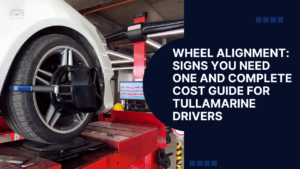
The correct size is only part of the picture. Even the right tyres wear quickly if the wheels are out of balance or out of alignment. Steering wheel vibration at speed, the car pulling to one side on a straight road, or uneven wear on the inside or outside edges are all signs worth getting checked. Our guide to signs your tyres need replacing covers what to look for between services, and our article on wheel alignment signs explains how alignment affects tyre wear.
Common questions about tyre size
Is the tyre size the same on the front and rear wheels?
On most cars the front and rear tyres are the same size, but some vehicles, especially performance cars, use a wider tyre on the rear axle. Check the tyre placard, which lists the front and rear sizes separately when they differ.
Does the tyre size on the placard have to match my current tyres?
Ideally, yes. The placard shows what the vehicle maker recommends. If the tyres on your car show a different size, it is worth having them checked to make sure they are suitable for the vehicle, its load and its wheels.
What tyre size do I need for my car?
The simplest answer is the size printed on your tyre placard or on your current tyres, as long as those tyres were the correct fit. Give us your car’s make, model and the size on the sidewall when you call, and we can confirm it.
Can I mix different tyre sizes on my car?
You should not mix different sizes on the same axle. Different sizes or types across the car can affect handling and braking, so fit matching tyres in pairs at a minimum, and preferably as a full set.
Where can I get my tyre size checked in Tullamarine?
Carrick Motors checks tyre condition, tread depth, pressure and fitment as part of our tyres, balancing and alignment service at 27 Carrick Dr, Tullamarine VIC 3043. Call us or email info@carrickmotors.com.au to book; our phone number is on our contact page.
Need help with your tyres in Tullamarine?
If you are not sure which tyre size your car needs, or your tyres are wearing unevenly, our mechanics can inspect them, check the fitment against your vehicle’s recommended size and fit, balance and align new tyres. Call Carrick Motors on the number shown on our contact page, or email info@carrickmotors.com.au to book. You can also see our full list of car services.