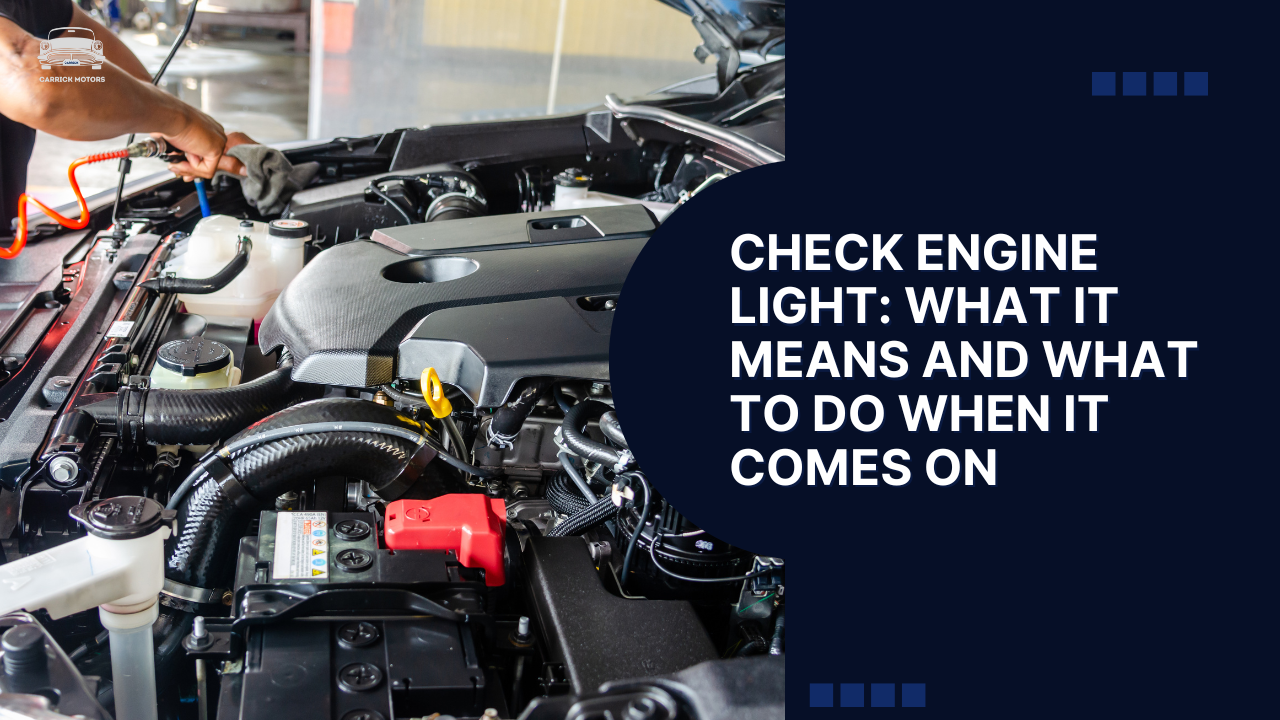
The check engine light indicates your vehicle’s onboard computer has detected a fault in the engine, transmission, or emissions system. Common causes include loose fuel caps, faulty oxygen sensors, catalytic converter issues, spark plug problems, and mass airflow sensor failures. Diagnostic scanning at a professional workshop identifies the specific fault code and required repairs.
Ignoring a check engine light risks engine damage, increased emissions, reduced fuel economy, and potential breakdown. Some causes require immediate attention while others allow continued driving with monitoring. This guide explains what triggers the warning, how to respond appropriately, and when to seek professional diagnosis at a qualified mechanic.
Understanding the Check Engine Light System
Modern vehicles contain sophisticated onboard diagnostic systems (OBD-II) that continuously monitor engine and emissions performance. Sensors throughout the powertrain measure operating parameters and report to the engine control module (ECM). When readings fall outside acceptable ranges, the ECM stores fault codes and illuminates the check engine light.
The check engine light serves as a communication tool between your vehicle’s computer and you. This amber or yellow warning indicates the ECM requires attention to resolve a detected issue. The light does not specify what failed; it simply alerts that diagnosis is necessary.
Different illumination patterns convey different urgency levels. A steady check engine light indicates a fault requiring attention but not necessarily immediate emergency response. A flashing check engine light signals severe misfiring that risks catalytic converter damage and requires immediate attention.
The OBD-II system standardised across all vehicles manufactured after 1996 stores diagnostic trouble codes (DTCs) when faults occur. These codes follow standardised formats: a letter indicating the system (P for powertrain, B for body, C for chassis) followed by four numbers identifying the specific fault. Professional diagnostic equipment reads these codes, providing direction for repair procedures.
The check engine light differs from other dashboard warnings. Oil pressure lights, temperature warnings, and battery indicators signal immediate mechanical emergencies. The check engine light indicates computer-detected faults that may or may not present immediate danger. Understanding this distinction helps calibrate response appropriately.
Ten Most Common Causes of Check Engine Light Activation
Numerous faults trigger check engine light illumination. These ten causes account for the majority of activations, ranging from simple fixes to significant repairs.
1. Loose, Damaged, or Missing Fuel Cap
Fuel cap issues represent the most common and easily resolved check engine light cause. The fuel system operates under pressure, and the cap seals this system. A loose cap allows fuel vapours to escape, triggering evaporative emission system fault codes.
Symptoms accompanying this cause include a fuel smell near the vehicle and slightly reduced fuel economy. The light typically illuminates within one to two drive cycles after the cap seal fails.
Resolution requires simply tightening the cap until it clicks or replacing damaged caps. After correction, the light may require several drive cycles to extinguish automatically, or manual code clearing accelerates resolution.
2. Oxygen Sensor Failure
Oxygen sensors measure exhaust gas composition, enabling the ECM to optimise fuel mixture. Vehicles contain multiple oxygen sensors: upstream sensors before the catalytic converter and downstream sensors after. Sensor failure prevents accurate mixture adjustment.
Symptoms include reduced fuel economy of 10% to 40%, rough idle, and potential catalytic converter damage from improper mixture. Failed sensors may cause hesitation during acceleration or unusual exhaust smell.
Oxygen sensor replacement costs $150 to $400 per sensor including labour. Delayed replacement risks catalytic converter damage costing $1,000 to $3,000 to repair.
3. Catalytic Converter Problems
The catalytic converter transforms harmful exhaust gases into less harmful emissions. Converter failure or efficiency degradation triggers check engine light activation and emissions test failure.
Symptoms include reduced engine performance, sulphur smell from exhaust, excessive heat beneath the vehicle, and rattling sounds from the converter location. Failed converters may cause the engine to run poorly or stall.
Catalytic converter replacement costs $800 to $3,000 depending on vehicle type and converter specifications. Converter failure often results from other unaddressed issues including misfires and oxygen sensor failures. Addressing root causes prevents repeat converter damage.
4. Mass Airflow Sensor Malfunction
The mass airflow (MAF) sensor measures air entering the engine, enabling accurate fuel calculation. Contamination or failure causes incorrect readings and improper fuel mixture.
Symptoms include rough idle, hesitation during acceleration, reduced power, stalling, and decreased fuel economy. The engine may run rich or lean depending on failure mode.
MAF sensor cleaning costs $50 to $100 if contamination causes the issue. Sensor replacement costs $200 to $400. Contamination often results from aftermarket air filters or failure to replace filters appropriately.
5. Spark Plug or Ignition Coil Issues
Spark plugs ignite the fuel-air mixture in each cylinder. Ignition coils provide high-voltage current to spark plugs. Failure of either component causes misfiring that triggers check engine light activation.
Symptoms include rough running, misfiring sensation, reduced power, poor fuel economy, and difficulty starting. Severe misfiring causes a flashing check engine light requiring immediate attention.
Spark plug replacement costs $100 to $300 for standard vehicles. Ignition coil replacement costs $150 to $400 per coil. Addressing misfires promptly prevents catalytic converter damage.
6. Exhaust Gas Recirculation (EGR) Valve Problems
The EGR valve recirculates exhaust gases into the intake to reduce emissions and combustion temperatures. Valve sticking, clogging, or failure affects engine performance and emissions.
Symptoms include rough idle, engine knocking, reduced power, and increased emissions. Some vehicles stall at idle when EGR valves stick open.
EGR valve cleaning costs $100 to $200 if carbon buildup causes issues. Valve replacement costs $200 to $500. Regular engine servicing helps prevent carbon buildup.
7. Vacuum Leak
Vacuum leaks allow unmetered air into the engine, disrupting fuel mixture calculations. Cracked hoses, failed gaskets, and damaged intake components cause vacuum leaks.
Symptoms include rough idle, high idle speed, hissing sounds from the engine bay, and poor fuel economy. The engine may stall when vacuum leaks are severe.
Vacuum leak repair costs vary significantly based on leak location. Simple hose replacement costs $50 to $150. Intake manifold gasket replacement costs $200 to $600.
8. Thermostat Failure
The thermostat regulates engine operating temperature by controlling coolant flow. Failure affects engine warm-up time and operating temperature maintenance.
Symptoms include slow warm-up, overheating, temperature gauge fluctuation, and poor heater performance. The ECM detects temperature irregularities and triggers check engine light.
Thermostat replacement costs $150 to $350 including labour. Addressing thermostat issues prevents overheating damage to engine components.
9. Battery or Charging System Problems
Low battery voltage or charging system irregularities affect sensor readings and ECM operation. The check engine light may illuminate alongside battery warning lights.
Symptoms include difficult starting, dimming lights, electrical system irregularities, and multiple warning lights. Voltage fluctuations cause erratic sensor readings triggering fault codes.
Battery replacement costs $150 to $350. Alternator replacement costs $400 to $800. Proper diagnosis distinguishes between battery and charging system faults.
10. Transmission Issues
Transmission problems trigger check engine light activation in many vehicles. The ECM monitors transmission operation and detects faults affecting shift quality, torque converter lockup, and gear engagement.
Symptoms include harsh shifting, slipping, delayed engagement, and unusual noises during shifting. Some transmission faults cause limp mode, limiting vehicle speed and power.
Transmission repair costs vary enormously based on fault severity. Minor solenoid replacement costs $200 to $500. Major transmission repairs cost $1,500 to $4,000 or more.
What to Do When Your Check Engine Light Comes On
Appropriate response to check engine light activation depends on accompanying symptoms and light behaviour. Follow these steps to respond effectively.
Step 1: Assess the Situation
Observe the check engine light behaviour. Determine whether the light illuminates steadily or flashes. Flashing indicates severe misfiring requiring immediate attention to prevent catalytic converter damage.
Note any accompanying symptoms. Changes in engine sound, performance, or behaviour provide diagnostic information. Unusual smells, smoke, or temperature changes warrant immediate concern.
Check other dashboard warnings. Multiple illuminated warnings suggest more serious issues than isolated check engine light activation.
Step 2: Check the Fuel Cap
Pull over safely and check your fuel cap. Ensure the cap seats properly and clicks when tightened. Inspect the cap seal for damage or debris. Replace damaged caps promptly.
If the cap was loose, tighten it and continue driving. The light may require several drive cycles to extinguish after correction. This simple check resolves a significant percentage of check engine light activations.
Step 3: Reduce Load and Monitor
If the light remains steady without severe symptoms, reduce vehicle load and monitor conditions. Avoid heavy acceleration, towing, or demanding driving. Proceed to your destination if close, or to a service facility for diagnosis.
Steady check engine lights with normal vehicle operation typically allow continued driving for short distances. Schedule diagnosis within several days to prevent potential issue escalation.
Step 4: Respond to Flashing Light or Severe Symptoms
Flashing check engine lights require immediate response. Pull over safely as soon as possible. Continuing to drive with a flashing light causes catalytic converter damage within minutes.
Severe symptoms including overheating, loss of power, unusual sounds, or smoke require immediate response regardless of light behaviour. Pull over safely and arrange towing to prevent further damage.
Step 5: Get Professional Diagnosis
Professional diagnostic scanning identifies specific fault codes stored by the ECM. Generic code readers available at auto parts stores provide basic codes but limited interpretation. Professional equipment provides detailed data including freeze frame information showing conditions when faults occurred.
Carrick Motors provides comprehensive diagnostic services identifying check engine light causes accurately. Experienced technicians interpret codes in context, distinguishing between symptoms and root causes.
Check Engine Light Diagnostic Process Explained
Understanding the diagnostic process helps customers appreciate the value of professional assessment and communicate effectively about their concerns.
Code Retrieval
Technicians connect diagnostic equipment to the OBD-II port, typically located beneath the dashboard near the steering column. The equipment communicates with the ECM, retrieving stored fault codes and related data.
Multiple codes may store simultaneously. Some codes indicate root causes while others indicate symptoms of underlying problems. Experienced technicians recognise relationships between codes and identify primary issues.
Freeze Frame Data Analysis
When faults occur, the ECM captures operating conditions in freeze frame data. This snapshot shows engine speed, coolant temperature, vehicle speed, fuel trim values, and other parameters at the moment of fault detection.
Freeze frame analysis helps technicians understand conditions triggering faults. Intermittent issues that occur only under specific conditions become identifiable through this data.
Live Data Monitoring
Professional diagnostic equipment displays real-time sensor readings while the engine operates. Technicians observe sensor values during various operating conditions, identifying readings outside normal ranges.
Live data monitoring reveals issues that stored codes alone cannot fully explain. Sensor behaviour patterns help distinguish between sensor failure and actual system problems.
Physical Inspection
Diagnostic codes direct physical inspection toward relevant systems. Visual examination identifies obvious issues including damaged wires, loose connections, vacuum leaks, and component damage.
Physical inspection confirms electronic diagnosis and identifies additional concerns. Some issues apparent through inspection may not trigger fault codes independently.
Repair Verification
After repairs, technicians clear fault codes and verify corrections through test driving and monitoring. Proper repair prevents code recurrence. Persistent codes after repair indicate misdiagnosis or additional issues requiring attention.
Cost of Check Engine Light Diagnosis and Repair
Diagnostic and repair costs vary based on fault complexity and required repairs. Understanding typical pricing helps evaluate quotes appropriately.
Diagnostic Fees
Professional diagnostic scanning typically costs $80 to $150 at Victoria workshops. This fee covers technician time, equipment use, and basic interpretation. Many workshops apply diagnostic fees toward repair costs when customers proceed with recommended work.
Basic code reading at auto parts stores often costs nothing but provides limited information without professional interpretation. This approach suits identifying simple issues but may mislead regarding complex problems.
Common Repair Costs
Fuel Cap Replacement: $20 to $50 for aftermarket, $40 to $100 for genuine
Oxygen Sensor Replacement: $150 to $400 per sensor
Mass Airflow Sensor: $200 to $400
Spark Plugs: $100 to $300 for complete set
Ignition Coils: $150 to $400 per coil
Catalytic Converter: $800 to $3,000
EGR Valve: $200 to $500
Thermostat: $150 to $350
Vacuum Leak Repair: $50 to $600 depending on location
These estimates include parts and labour for standard passenger vehicles at independent workshops. European vehicles, performance vehicles, and complex repairs command higher pricing.
When Costs Escalate
Deferred diagnosis allows minor issues to cause secondary damage. A $200 oxygen sensor replacement postponed may cause $2,000 catalytic converter failure. A $150 spark plug replacement ignored may damage ignition coils costing $400 each.
Multiple stored codes may indicate single root causes or multiple independent failures. Experienced technicians identify relationships between codes to prevent unnecessary repairs while addressing actual problems.
Can You Drive With the Check Engine Light On?
Driving with an illuminated check engine light depends on light behaviour and accompanying symptoms. Different scenarios warrant different responses.
Steady Light, Normal Operation
A steady check engine light with otherwise normal vehicle operation typically allows continued driving for limited distances. Schedule diagnosis within several days to identify and address the cause before potential escalation.
Monitor vehicle behaviour during driving. Changes in performance, sounds, or operation warrant earlier diagnosis. Avoid demanding driving conditions including towing, steep grades, and sustained high speeds.
Steady Light, Reduced Performance
Reduced performance accompanying check engine light activation suggests more significant issues. The vehicle may enter limp mode, limiting speed and power to prevent damage.
Drive directly to a service facility if possible. Avoid extended driving that may worsen underlying conditions. Towing provides the safest option for significant performance reduction.
Flashing Light
A flashing check engine light requires immediate attention. Pull over safely and do not continue driving. Flashing indicates severe misfiring causing unburned fuel to enter the exhaust system, rapidly damaging the catalytic converter.
Arrange towing to a service facility. Catalytic converter replacement costs thousands of dollars; the towing cost represents worthwhile investment against potential damage.
Multiple Warning Lights
Multiple simultaneous warning lights indicate potentially serious issues. Pull over safely and assess conditions. Temperature warnings, oil pressure warnings, or battery lights accompanying check engine activation warrant immediate attention.
Do not continue driving with multiple warning lights unless certain of their cause. Multiple warnings may indicate cascading failures or shared underlying causes requiring professional assessment.
Preventing Check Engine Light Problems
Proactive maintenance reduces check engine light occurrence and ensures early detection of developing issues.
Follow Service Schedules
Regular car servicing at manufacturer-specified intervals maintains systems in proper operating condition. Oil changes, filter replacements, and fluid services prevent contamination affecting sensors and components.
Spark plug replacement at specified intervals prevents misfires. Air filter maintenance ensures proper airflow measurement. Fuel system cleaning prevents injector and sensor issues.
Use Quality Fuel
Quality fuel from reputable stations reduces contamination affecting fuel system components. Avoid consistently using lowest-grade fuel when manufacturer recommendations specify higher octane.
Fuel system additives provide occasional cleaning benefit but do not substitute for proper maintenance. Follow manufacturer recommendations regarding fuel specifications.
Address Issues Promptly
Minor issues escalate when ignored. Rough running, unusual sounds, or performance changes warrant investigation before triggering check engine light activation. Early attention typically costs less than deferred repair.
Strange smells, particularly fuel or exhaust odours, suggest issues requiring attention. Visible leaks beneath the vehicle indicate fluid loss requiring diagnosis.
Maintain Fuel Cap Integrity
Inspect your fuel cap periodically for seal damage and proper function. Replace caps showing wear, cracking, or seal deterioration. Ensure the cap clicks securely after fueling.
Aftermarket fuel caps may not seal properly despite fitting physically. Quality replacement caps matching original equipment specifications ensure proper sealing.
Frequently Asked Questions About Check Engine Lights
Is it safe to drive with the check engine light on?
Driving with a steady check engine light and normal vehicle operation is generally safe for short distances to reach a service facility. A flashing check engine light requires immediate attention and the vehicle should not be driven. Reduced performance, unusual sounds, overheating, or multiple warning lights accompanying check engine activation warrant immediate professional assessment rather than continued driving.
Will the check engine light reset itself?
Yes, check engine lights may reset automatically after the underlying issue resolves and the vehicle completes several drive cycles. Fuel cap issues often reset within 10 to 20 drive cycles after proper sealing. However, most issues require repair before the light extinguishes. Disconnecting the battery clears codes temporarily but does not repair underlying faults; the light will return once the ECM detects the unresolved issue.
How much does it cost to diagnose a check engine light?
Professional check engine light diagnosis costs $80 to $150 at most Victoria workshops. This fee covers diagnostic equipment connection, fault code retrieval, freeze frame analysis, and technician interpretation. Many workshops apply this fee toward repair costs when customers proceed with recommended work. Basic code reading at auto parts stores may be free but provides limited information without professional interpretation.
What does a flashing check engine light mean?
A flashing check engine light indicates severe engine misfiring that risks immediate catalytic converter damage. Unburned fuel from misfiring cylinders enters the exhaust system and ignites in the catalytic converter, causing extreme temperatures that destroy the converter within minutes. Pull over safely immediately and arrange towing to a service facility. Do not continue driving with a flashing check engine light.
Can a check engine light come on for no reason?
Check engine lights activate only when the ECM detects conditions outside programmed parameters. However, sensor failures can trigger lights without actual engine problems existing. Intermittent electrical issues may cause temporary activations that resolve spontaneously. Professional diagnosis determines whether detected faults indicate actual problems or sensor malfunctions requiring different repairs.
Does check engine light always mean expensive repairs?
No, many check engine light causes involve inexpensive repairs. Loose fuel caps cost nothing to tighten and replacement caps cost $20 to $50. Vacuum hose repairs often cost under $150. However, some causes including catalytic converter failure and transmission problems involve significant expense. Professional diagnosis identifies specific causes, allowing accurate cost estimation before committing to repairs.
How long can I drive with the check engine light on before causing damage?
Driving duration without damage depends entirely on the specific cause. Some causes like loose fuel caps create no additional damage regardless of driving duration. Other causes like severe misfiring cause damage within minutes. Oxygen sensor failures cause progressive catalytic converter damage over weeks to months of continued driving. Professional diagnosis identifies cause-specific urgency and appropriate response timing.
Expert Check Engine Light Diagnosis at Carrick Motors
The check engine light alerts you to computer-detected faults requiring diagnosis. Common causes range from loose fuel caps to catalytic converter failures. Steady lights typically allow short-distance driving to service facilities while flashing lights require immediate attention.
Carrick Motors provides comprehensive check engine light diagnostic services throughout Tullamarine, Airport West, Gladstone Park, and Victoria’s northern suburbs. Advanced diagnostic equipment identifies fault codes accurately. Experienced technicians interpret codes in context, distinguishing symptoms from root causes and recommending appropriate repairs. Do not ignore your check engine light. Contact Carrick Motors to schedule diagnostic assessment. Early diagnosis prevents expensive secondary damage and ensures your vehicle operates safely and efficiently.