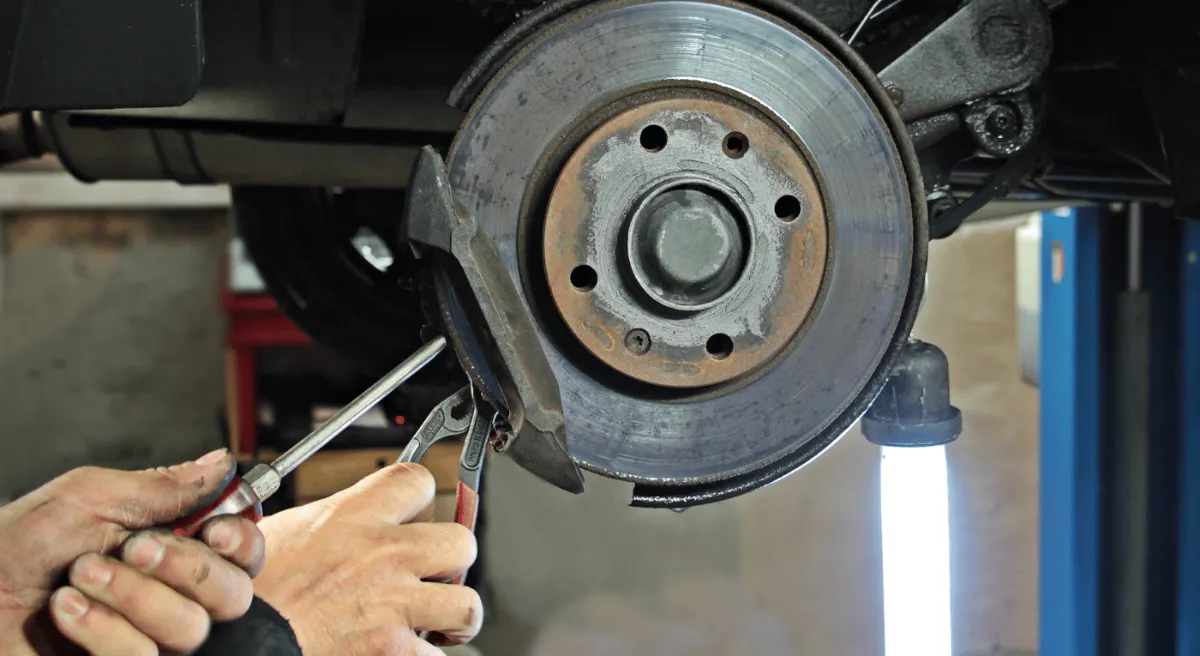
Most cars use one of four brake disc rotor types: solid, vented, drilled or slotted (plus combinations such as drilled-and-slotted). The right type is the one your car’s manufacturer specified for each axle, and a rotor is machined only while it is above its minimum thickness – otherwise it is replaced. Below, the team at Carrick Motors in Tullamarine explains how each rotor type works, which vehicles usually use them, the signs your rotors need attention, and how we decide between machining and replacement.
What does a brake disc rotor do?
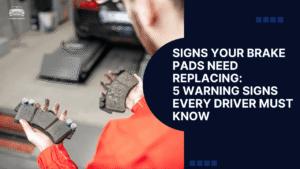
The rotor (also called a brake disc) is the metal disc that turns with the wheel. When you press the pedal, the calliper squeezes the brake pads against both faces of the rotor, and the friction turns the car’s movement into heat. The pads are the part designed to wear; the rotor has to absorb that heat, get rid of it, and stay flat and smooth so the pads grip evenly. Related reading: 5 signs your brake pads need replacing and brake pad replacement cost guide.
Because the rotor’s job is mostly about managing heat, the main difference between rotor types is how they shed that heat and keep the pad surface clean.
The main types of brake disc rotors
Solid rotors
A solid rotor is a single flat disc of cast iron with no internal cooling passages. It is simple, compact and inexpensive to make. Solid rotors are common on the rear axle of many everyday cars and on the front of some small, light vehicles, where the brakes do less of the work and build less heat. Their limit is heat: under repeated heavy braking a solid disc gets hot faster than a vented one.
Vented rotors
A vented (or ventilated) rotor is two braking faces joined by internal vanes, leaving air channels through the middle of the disc. As the wheel turns, air is drawn through those channels and carries heat away. Most modern passenger cars, SUVs, utes and vans use vented rotors on the front axle, because the front brakes do most of the stopping when the weight shifts forward. Many larger and heavier vehicles use vented rotors on the rear as well.
Drilled rotors
Drilled (cross-drilled) rotors have holes drilled through the braking faces. The holes help release gas and water from between the pad and the disc and add some extra surface for cooling. They are mostly seen on performance and some prestige models, and as aftermarket upgrades. The trade-off is that the holes reduce the amount of metal, and drilled discs can be more prone to fine cracks forming around the holes under repeated very high heat, so they suit the cars they were designed for rather than being an automatic upgrade.
Slotted rotors
Slotted rotors have shallow grooves machined across the braking faces. The slots wipe the pad surface as the disc turns, clearing dust, gas and water and helping keep the pad’s bite consistent. You will find them on some performance cars, on vehicles that tow or carry heavy loads, and as an aftermarket option. They can wear pads a little faster and may make more noise than a plain disc.
Drilled and slotted rotors
Some rotors combine holes and slots to get a bit of both effects. These are mainly aftermarket and performance parts. For a daily-driven family car, a quality plain rotor of the type the manufacturer fitted is usually the sensible choice.
Other rotor designs you may come across
Some vehicles use two-piece rotors, where the braking ring is bolted to a separate centre hat, and high-end performance cars may use carbon-ceramic discs. Some rear brakes use a disc with a small drum built into the centre for the park brake. These are less common, and parts and procedures are specific to the vehicle, which is why we always check what your car was built with before quoting.
Which cars use which rotor type?
As a general guide, and always subject to what the manufacturer specified for your exact model:
- Small and light cars: vented fronts on most models, solid fronts on some; solid rotors or drum brakes at the rear.
- Mid-size sedans, hatches and small SUVs: vented front rotors, solid or vented rear rotors.
- Large SUVs, 4WDs, utes and vans: larger vented rotors, often vented at the rear too, to cope with weight and towing.
- Performance models: larger vented rotors, often drilled, slotted or two-piece from the factory.
The safest rule is to replace like with like: the same diameter, thickness and design the car left the factory with, unless there is a good reason to change. Fitting a different style of rotor does not make an everyday car stop better on its own; correct-fit parts in good condition do.
Signs your brake rotors need attention
Rotors usually give warning signs before they become a safety problem. Book a brake inspection if you notice:
- Vibration or pulsing through the brake pedal or steering wheel when you brake, often caused by uneven rotor thickness (commonly called warped rotors).
- Grinding or scraping noises, which can mean the pads are worn through and metal is contacting the rotor.
- Deep grooves or scoring you can see on the rotor face through the wheel.
- A raised lip around the outer edge of the rotor, showing it has worn thinner.
- Blue or dark heat marks or hard spots on the braking surface.
- Cracks anywhere on the disc, especially around holes on drilled rotors.
- The car pulling to one side under braking, or the brakes feeling less confident than they used to.
Some of these symptoms can also come from callipers, brake fluid, suspension or wheel alignment, which is why a proper inspection matters before any parts are replaced.
Machining vs replacing brake rotors
Machining (also called resurfacing or skimming) takes a thin layer off both faces of the rotor on a brake lathe so it is flat and smooth again. It is a good option when the rotor is lightly scored, glazed or slightly uneven, and when it will still be above the minimum thickness after machining.
Every rotor has a minimum thickness set by the manufacturer, often stamped on the rotor itself. A rotor that is already near or below that figure has less metal to absorb heat and must be replaced, not machined. Replacement is also the right call when a rotor is cracked, deeply grooved, badly heat damaged, or when machining would take it under the limit.
Many modern rotors are made relatively thin from new, so on some vehicles there is little or no room to machine them. In those cases we will explain why replacement is the better option before any work goes ahead. When rotors are replaced, they are normally done in pairs on the same axle so both sides brake evenly, and new pads are fitted to suit the fresh surface.
How Carrick Motors handles brake work
Carrick Motors is a car mechanic workshop at 27 Carrick Dr, Tullamarine VIC 3043, and a local business award winner. We carry out brake pad replacement and disc machining for all makes and models, and the work follows the same simple process as every job in our workshop:
- Call: call the workshop or email info@carrickmotors.com.au and tell us what the brakes are doing.
- Booking: we book a time that suits you.
- Receiving: we receive the car and inspect the full braking system – pads, rotors, callipers, brake lines and fluid level.
- Work: we explain what needs replacing and what does not, then fit correct-fit pads and machine or replace rotors only where needed.
- Finish: a final test drive confirms the brakes are smooth and predictable.
- Customer update: we keep you updated and tell you what was done.
We focus on genuine diagnostics and professional work, with clear, upfront advice before anything is fitted. As well as our Tullamarine workshop, Carrick Motors offers mechanical repairs at the customer’s door through our mobile mechanic service, and suburbs within 10 km of the workshop can arrange pick-up and drop-off, subject to availability. See our areas we serve page for the suburbs we cover, or our full list of services.
Disc rotor questions we often hear
Do I need new rotors every time I get new brake pads?
No. If the rotors are above minimum thickness and free from deep scoring, cracks or heat damage, they can stay in service with new pads, sometimes after machining. We measure them and tell you which applies to your car.
Are drilled or slotted rotors better for my car?
For most everyday cars, no. They are designed for performance or heavy-duty use, and they can wear pads faster or make more noise. Rotors of the type and size your manufacturer specified are usually the right choice.
What causes warped rotors?
The vibration people call warping is usually uneven rotor thickness or uneven pad deposits on the disc. Common causes include repeated heavy braking, holding the brakes on hard after they are very hot, and wheel nuts tightened unevenly. Machining can often fix it if there is enough thickness left.
Can I keep driving with grinding brakes?
It is not a good idea. Grinding often means metal-on-metal contact, which damages the rotor quickly and reduces braking performance. Have the brakes checked as soon as possible.
Can you check my brakes before a roadworthy?
Yes. Brakes are part of every roadworthy certificate inspection, so it makes sense to have worn pads or rotors looked at early. Call us to book.
When is the workshop open?
Our Tullamarine workshop is open Monday to Saturday, 8am to 5pm. Contact us or call the workshop to book a brake inspection.
Book a brake and rotor inspection in Tullamarine
If your brakes are vibrating, grinding or just do not feel right, have the pads and rotors checked before a small job becomes a bigger one. You can read more about our brake pad replacement and disc machining service. Call Carrick Motors, email info@carrickmotors.com.au, or visit us at 27 Carrick Dr, Tullamarine VIC 3043.